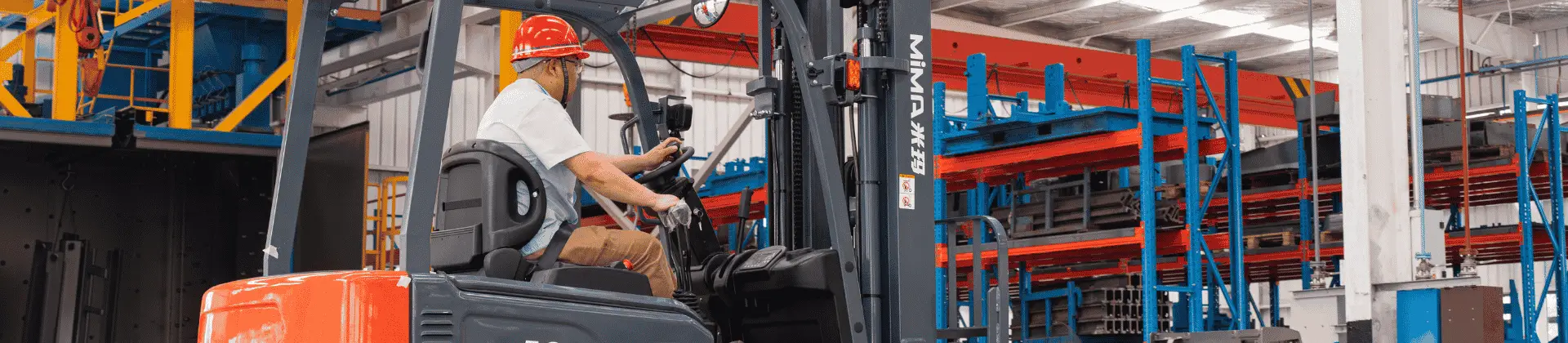
Electric Reach Truck
What Is an Electric Reach Truck?
Compact pallet handling for narrow aisles and high racking
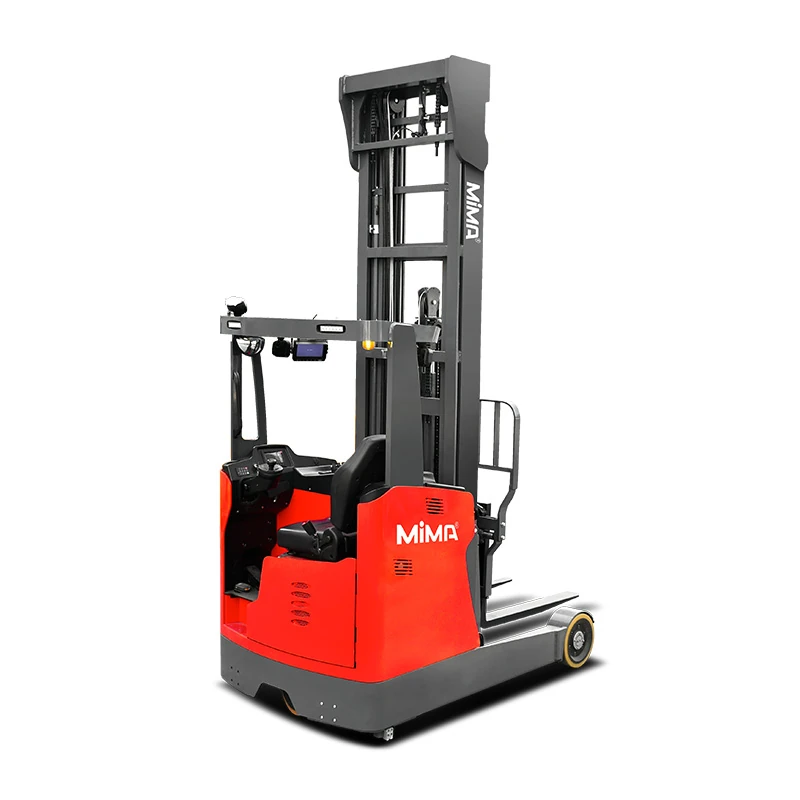
1.6–2.0T Seated Electric Reach Truck MFZ16/20
- Load Capacity
- 1,600–2,000 kg
- Lift Height
- Up to 12,500 mm
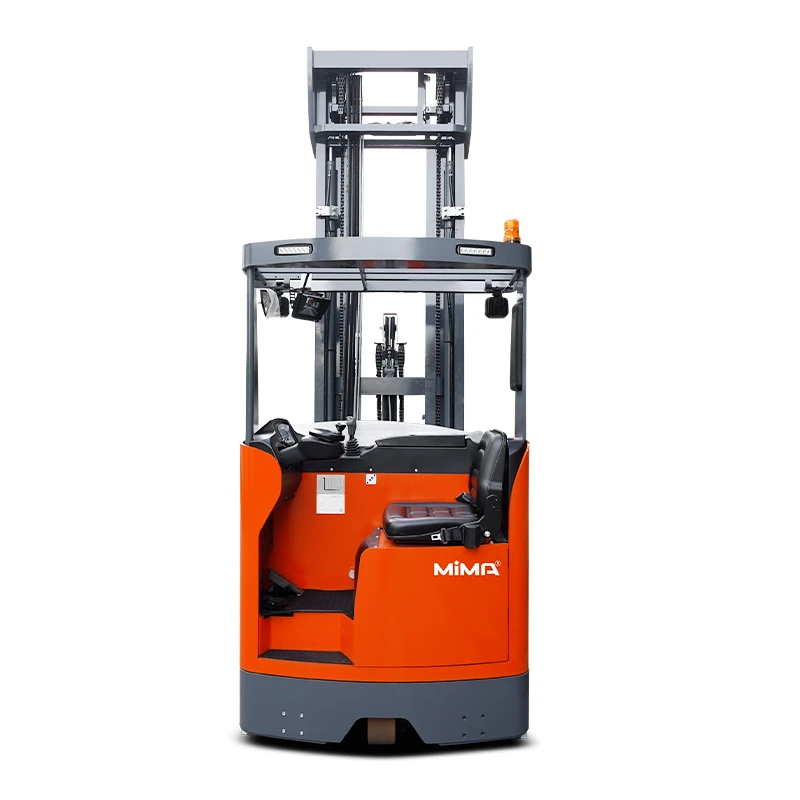
2.5–3.0T Heavy-Duty Sit-down Electric Reach Truck MFZ25/30
- Load Capacity
- 2,500–3,000 kg
- Lift Height
- Up to 8,500 mm
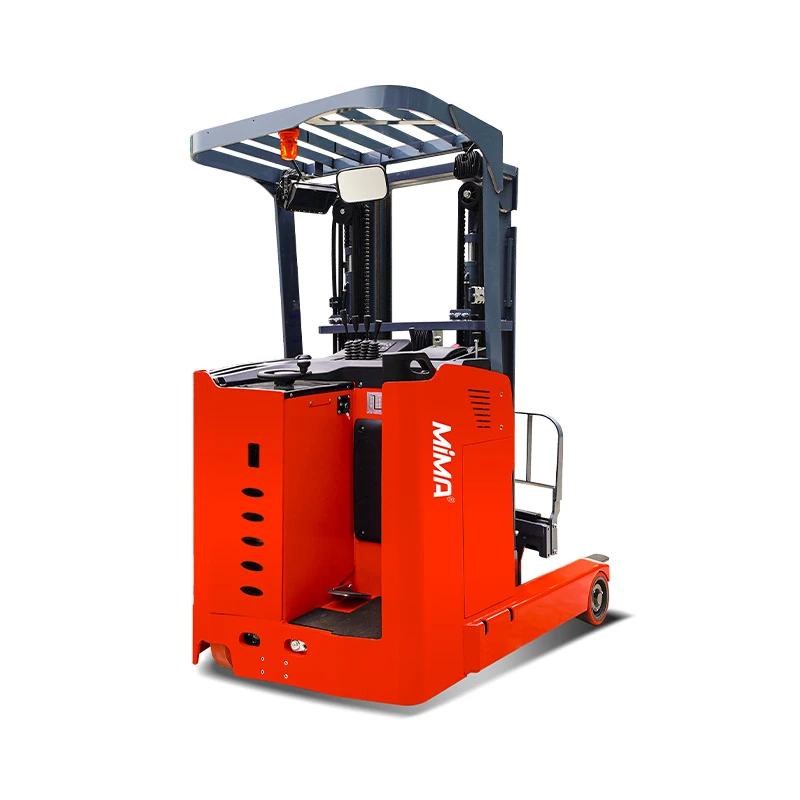
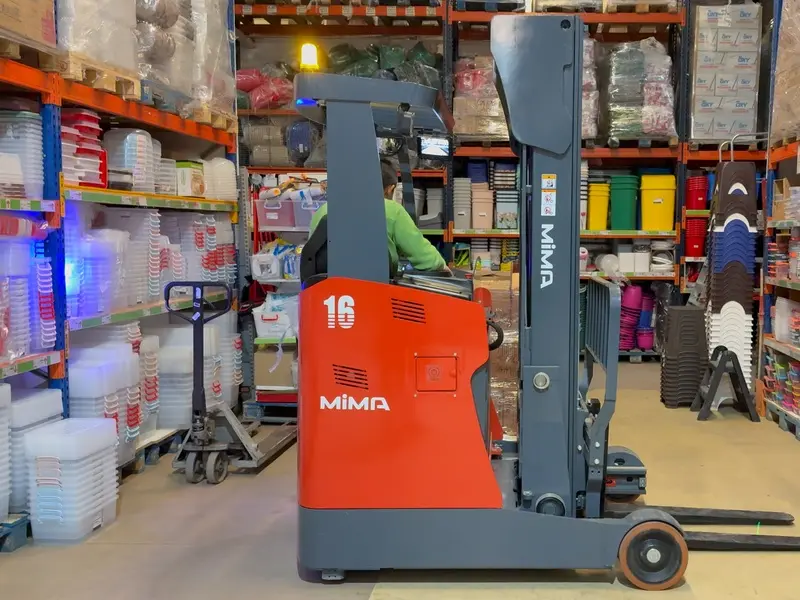
1.2–1.5T Stand-on Electric Reach Truck MF12/15
- Load Capacity
- 1,200–1,500 kg
- Lift Height
- Up to 7,500 mm
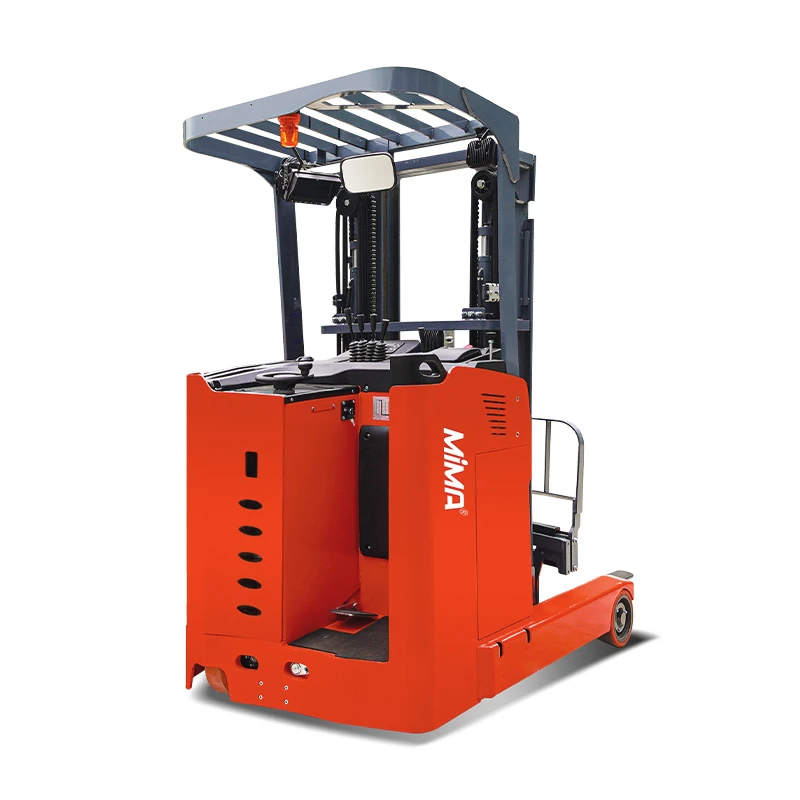
2.5–3.0T Heavy-Duty Stand-on Electric Reach Truck MF25/30
- Load Capacity
- 2,500–3,000 kg
- Lift Height
- Up to 8,000 mm
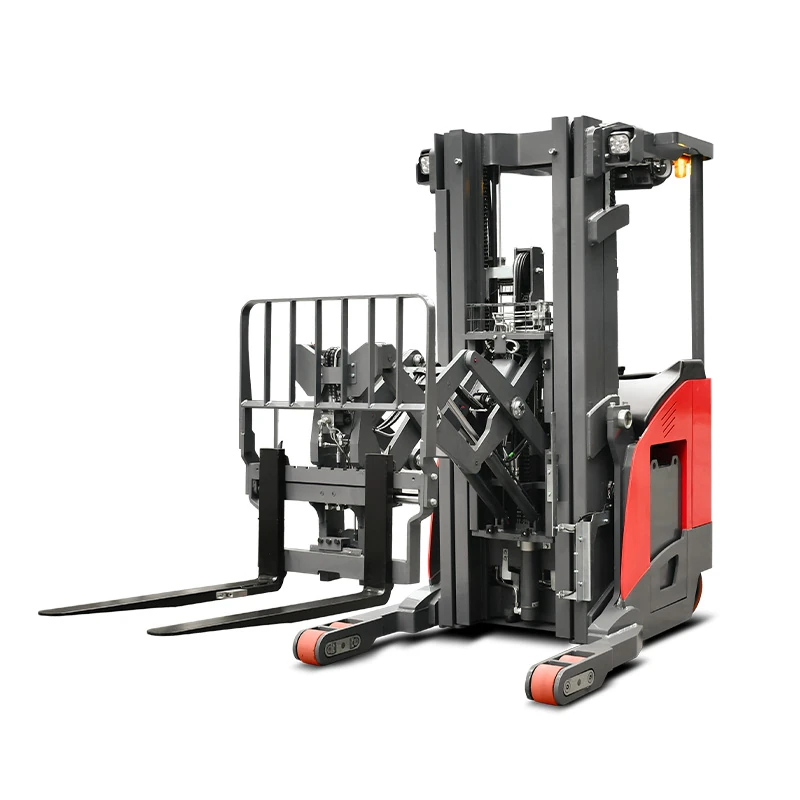
1.5T Electric Double-Deep Scissor Reach Truck MFE15
- Load Capacity
- 1,500 kg
- Lift Height
- Up to 10,160 mm
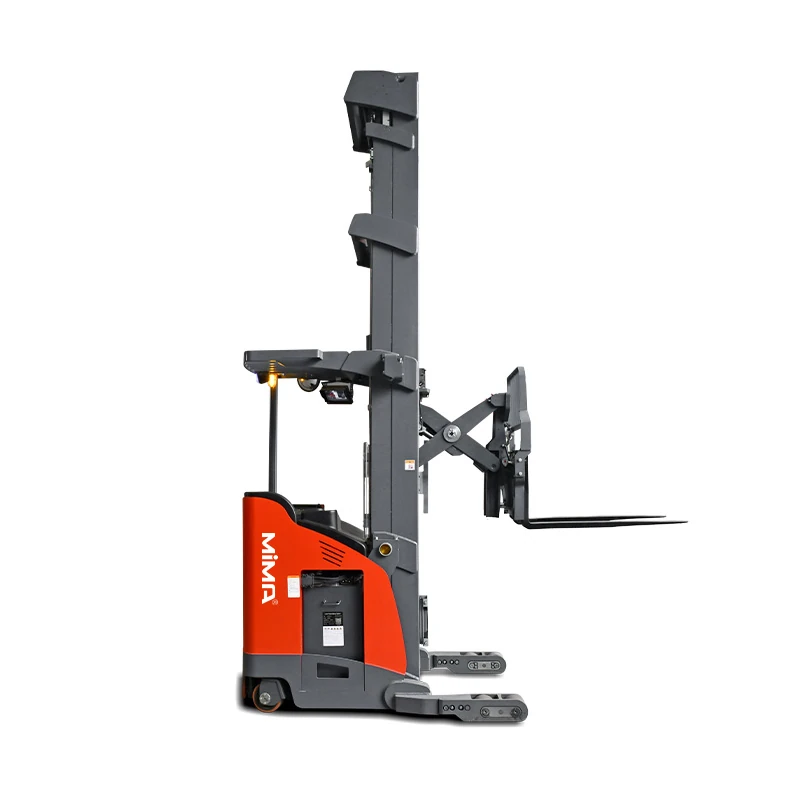
2.0T Electric Scissor Reach Truck MFE20
- Load Capacity
- 2,000 kg
- Lift Height
- Up to 10,160 mm
Built for Efficient Rack Storage
Reach mechanisms keep the chassis compact while supporting accurate pallet placement across standard, heavy-duty and deep-rack warehouse applications.
Compact Aisle Operation
The load retracts towards the chassis for travel, reducing right-angle stacking space compared with many equivalent counterbalance forklifts.
Controlled Reach Movement
The mast or scissor carriage extends into the rack for pallet placement and retracts the load for stable travel between storage locations.
Stand-On or Seated
Choose stand-on trucks for frequent directional changes or seated models for longer travel distances, high lift and extended operating shifts.
Single- and Double-Deep Options
Conventional, single-scissor and double-scissor configurations cover standard rack faces and deeper storage positions within one product range.
Which Electric Reach Truck Is Right for You?
Compare the six current product families by operator position, capacity, lift height, reach system and published aisle requirement.
| Spec | MF12/15 | MFZ16/20 | MF25/30 | MFZ25/30 | MFE15 | MFE20 |
|---|---|---|---|---|---|---|
| Operator format | Stand-on | Seated | Stand-on | Seated | Stand-on | Stand-on |
| Load capacity | 1,200–1,500 kg | 1,600–2,000 kg | 2,500–3,000 kg | 2,500–3,000 kg | 1,500 kg | 2,000 kg |
| Maximum lift height | Up to 7,500 mm | Up to 12,500 mm | Up to 8,000 mm | Up to 8,500 mm | Up to 10,160 mm | Up to 10,160 mm |
| Reach / rack format | Retractable mast Single-deep | Retractable mast Single-deep | Retractable mast Single-deep | Retractable mast Single-deep | Double-scissor Double-deep | Single-scissor Single-deep |
| Published aisle width | 2,502–2,682 mm* | 2,707–2,843 mm* | 2,892–3,066 mm* | 2,915–2,960 mm* | From 3,077 mm* | From 2,976 mm* |
| Best for | Compact stand-on handling | High-bay storage and long shifts | Heavy loads with stand-on control | Heavy loads and seated operation | Double-deep storage | Extended single-deep access |
How to choose: Start with pallet weight, load centre, rack depth, top beam height and clear stacking aisle. Choose MF or MFZ for conventional single-deep racking, seated MFZ models for longer travel or higher lift, stand-on MF models for frequent direction changes, MFE15 for double-deep storage and MFE20 for extended single-deep reach with 2.0-tonne capacity.
*Published aisle values are based on the pallet size and operating conditions stated on each product page. Nominal capacity does not automatically apply at maximum lift height. Final aisle width, reach distance and residual capacity must be confirmed against pallet dimensions, load centre, rack clearances, mast, attachments, floor condition and the complete duty cycle.
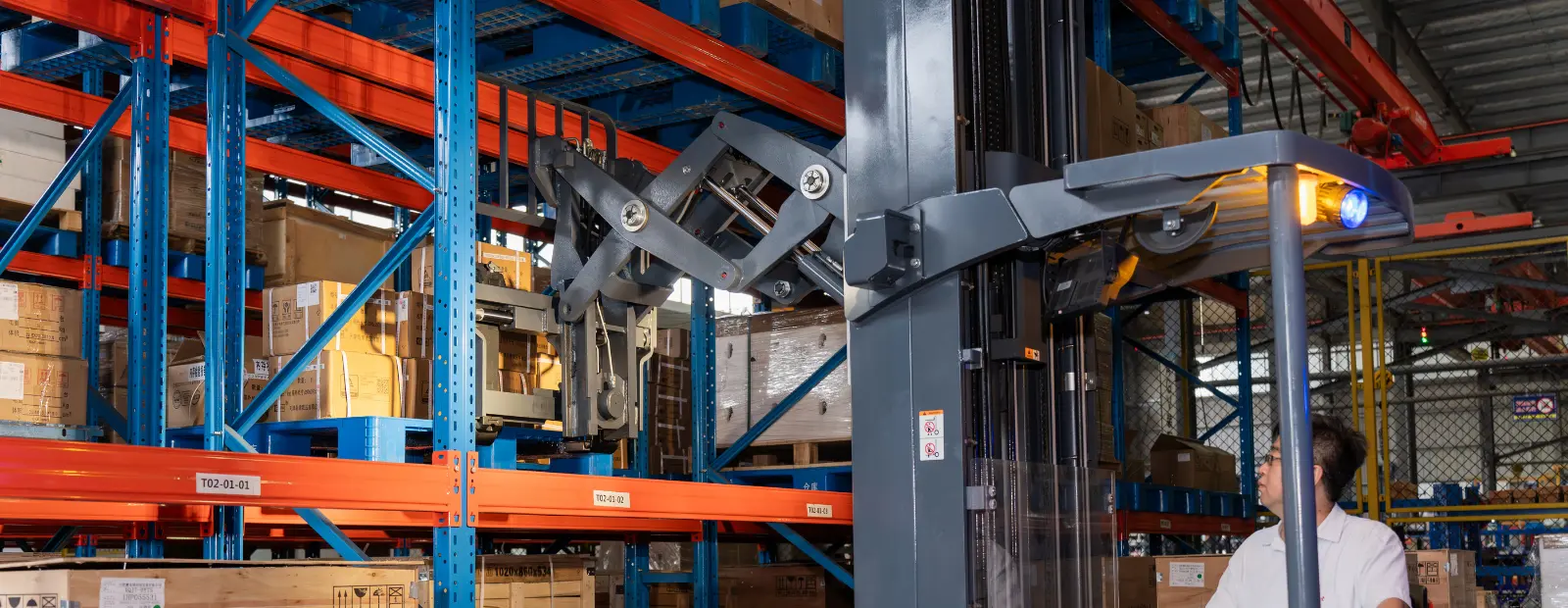
Match the Reach Truck to Your Rack Layout
The right reach truck depends on the pallet, rack dimensions, operating aisle, reach distance and required handling cycle.
- Pallet dimensions, orientation and load centre
- Maximum load and residual capacity at height
- Top beam height and required lift height
- Clear stacking aisle and available turning space
- Rack depth and single- or double-deep layout
- Floor condition, travel distance and daily duty cycle
MiMA Thailand can review your warehouse drawing and operating data before recommending a stand-on, seated or scissor-reach configuration.
Request a Project Review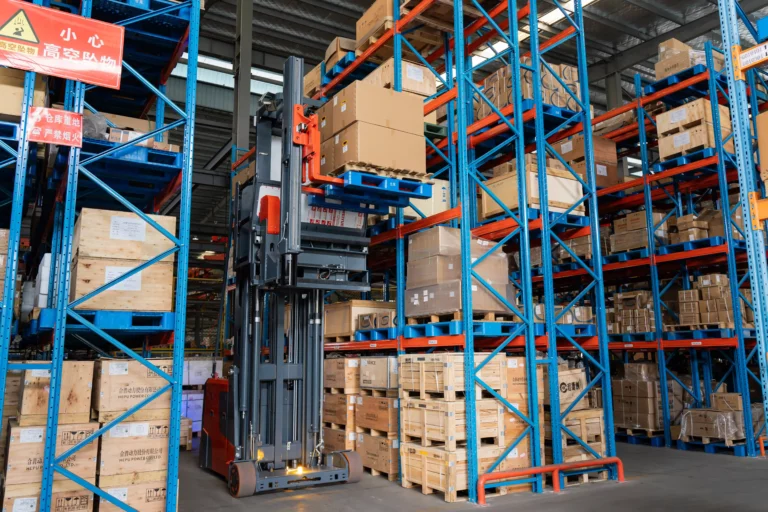
Frequently Asked Questions
What is an Electric Reach Truck used for?
It is primarily used to store and retrieve pallets in indoor warehouse racking. The compact chassis and forward-reaching mast or fork carriage support narrow-aisle work and high-rack handling.
How is a Reach Truck different from a Counterbalance Forklift?
A reach truck extends its mast or fork carriage into the rack and retracts the load for compact travel. It is optimised for smooth warehouse floors and rack aisles, while a counterbalance forklift is generally better suited to loading, unloading and mixed indoor-outdoor transfer work.
Should I choose a stand-on or seated Reach Truck?
Stand-on trucks suit operations with frequent entry, exit and directional changes. Seated trucks are often preferred for longer travel distances, extended shifts and high-frequency storage cycles. The final choice should also consider aisle width, lift height and operator workflow.
What is the difference between MF, MFZ and MFE models?
MF models use stand-on operation with a conventional retractable mast. MFZ models provide seated operation for longer travel and high-level handling. MFE models use scissor reach mechanisms for extended single- or double-deep rack access.
Which model is designed for double-deep racking?
MFE15 uses a double-scissor reach mechanism for double-deep storage. Rack depth, beam layout, pallet condition, reach distance and residual capacity must be checked before specifying the truck.
Does rated capacity apply at maximum lift height?
No. Residual capacity normally decreases as lift height, load centre and forward reach increase. Mast, fork length and attachments also affect the applicable load chart, so the final configuration must be checked against the heaviest pallet stored at height.
What information is needed for model selection?
Please provide pallet dimensions and orientation, maximum load, load centre, rack height and depth, clear stacking aisle, required reach distance, lift height, floor condition, travel distance, shift pattern and charging arrangement.