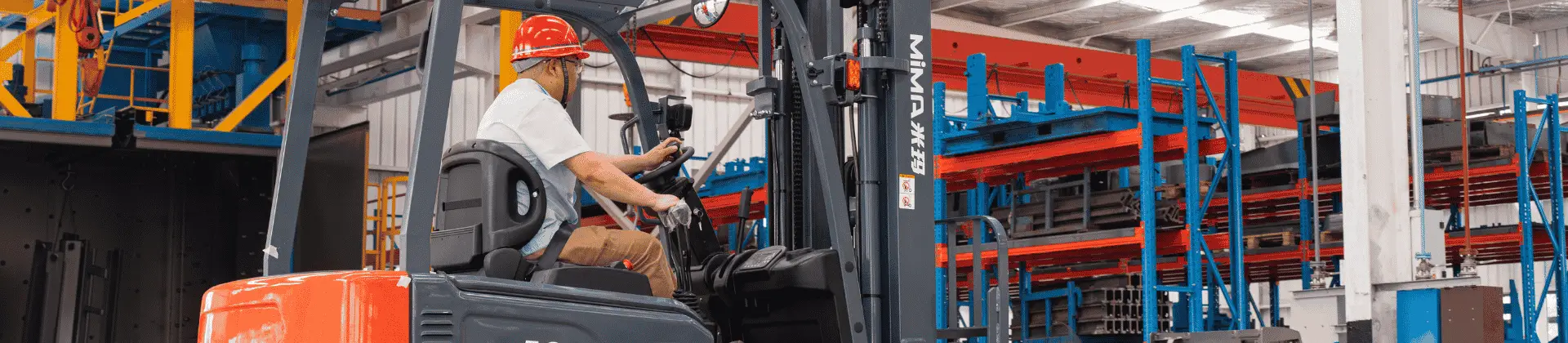
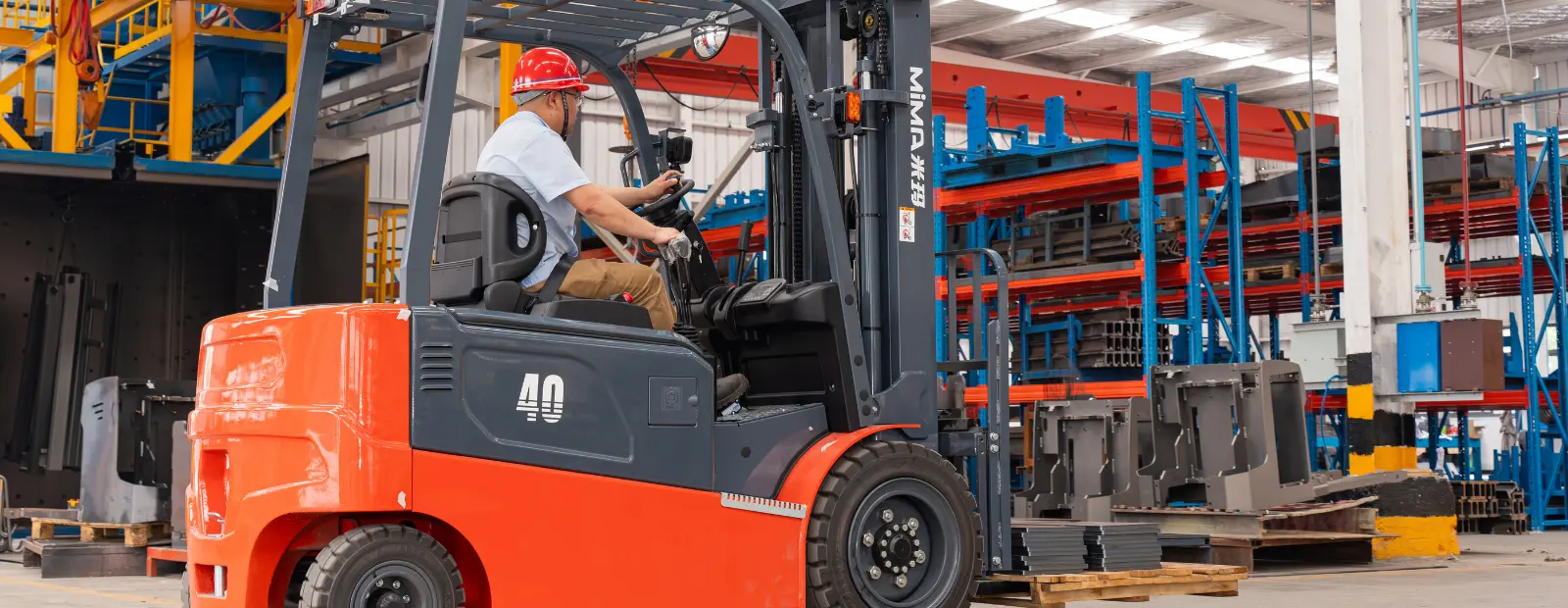
Electric Counterbalance Forklift
What Is an Electric Counterbalance Forklift?
Versatile electric handling from loading bay to storage aisle
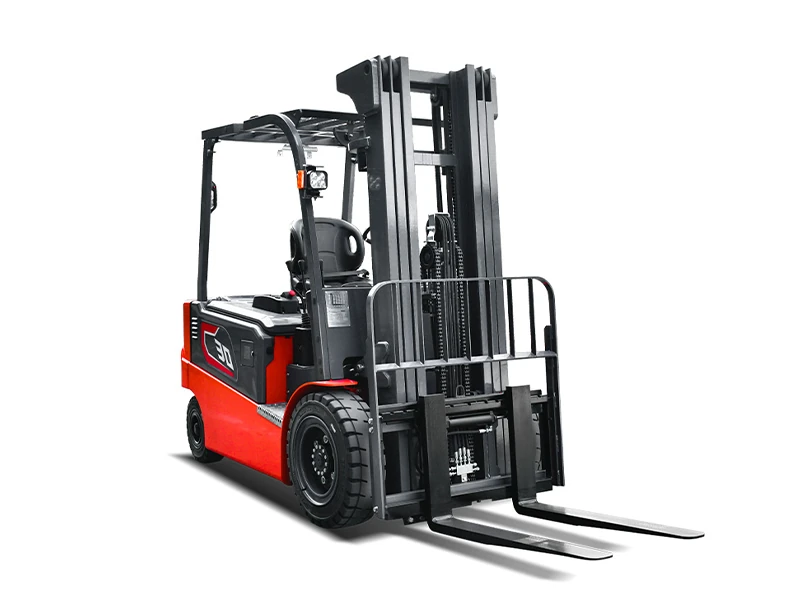
1.5–2.0T Four-wheel Electric Counterbalance Forklift MK15/20
- Load Capacity
- 1,500–2,000 kg
- Lift Height
- Up to 7,000 mm
2.5–3.0T Four-wheel Electric Counterbalance Forklift MK25/30
- Load Capacity
- 2,500–3,000 kg
- Lift Height
- Up to 7,000 mm
3.5–4.0T Heavy-Duty Four-wheel Electric Counterbalance Forklift MK35/40
- Load Capacity
- 3,500–4,000 kg
- Lift Height
- Up to 7,000 mm
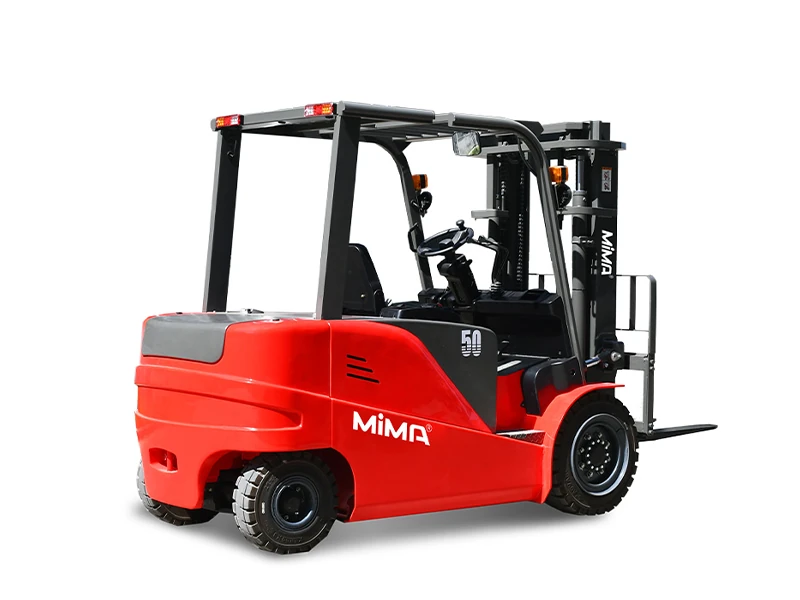
4.5–5.0T Heavy-Duty Four-wheel Electric Counterbalance Forklift MK45/50
- Load Capacity
- 4,500–4,999 kg
- Lift Height
- Up to 6,000 mm
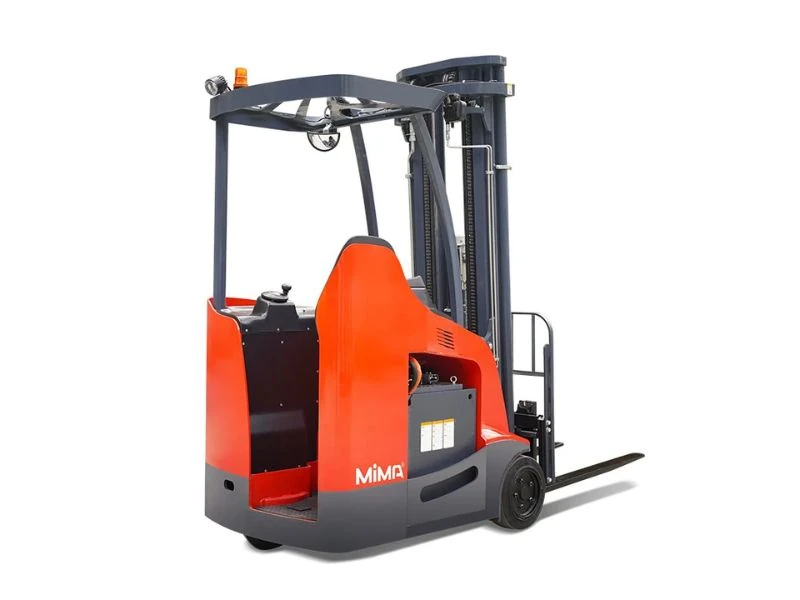
1.8T Stand-on Electric Counterbalance Forklift MKN18
- Load Capacity
- 1,800 kg
- Lift Height
- Up to 6,200 mm
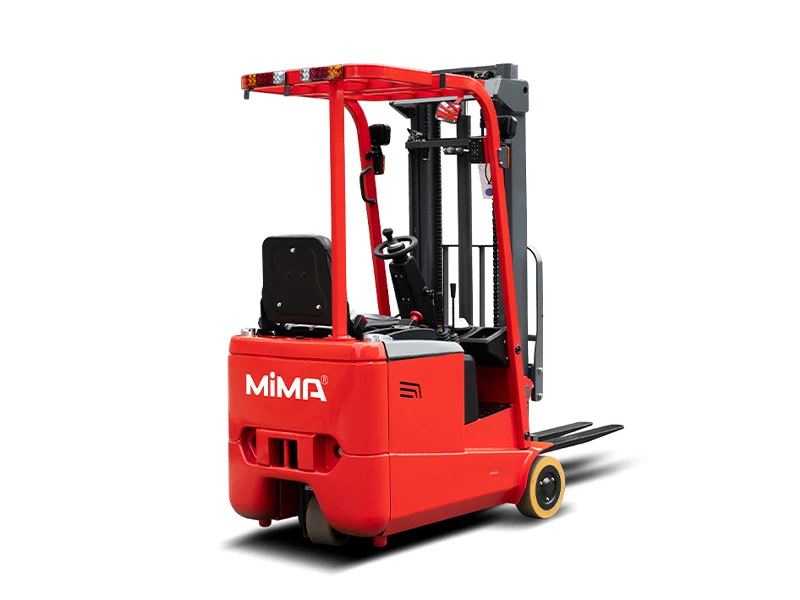
1.0–1.5T Compact 3-Wheel Electric Counterbalance Forklift MKA10/15
- Load Capacity
- 1,000–1,500 kg
- Lift Height
- Up to 4,500 mm
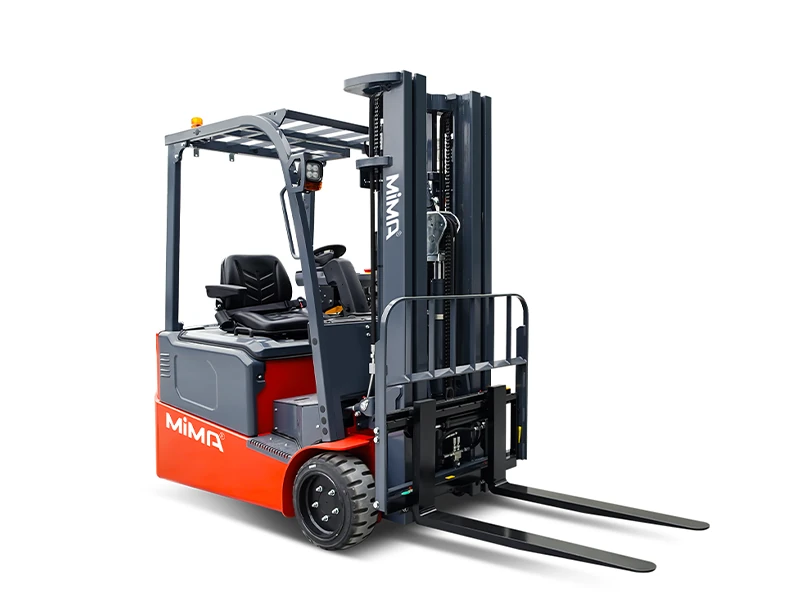
1.6–2.0T Compact 3-Wheel Electric Counterbalance Forklift MKC16/20
- Load Capacity
- 1,600–2,000 kg
- Lift Height
- Up to 7,500 mm
Power Up Your Daily Material Handling
Electric performance, clear visibility and configurable chassis options support efficient handling across warehouses, loading areas and production facilities.
Efficient Electric Power
AC drive systems, regenerative braking and configurable battery options support responsive travel with low routine motor maintenance.
Compact 3-Wheel Agility
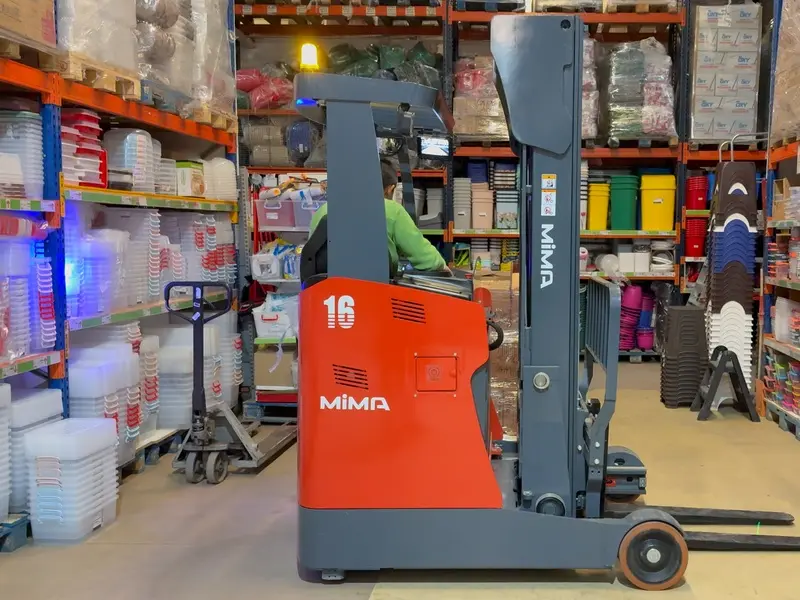
MKA and MKC models combine a small turning radius with direct pallet access for restricted indoor areas and busy loading zones.
Stable 4-Wheel Capacity
Four-wheel MK platforms cover everyday pallet work through heavy industrial loads up to the five-tonne class.
Configured for the Application
Select the mast, battery, tyres, cabin and hydraulic attachments around the load, environment, shift pattern and travel route.
Which Electric Counterbalance Forklift Is Right for You?
Compare the seven current product families by operating format, capacity, lift height, reference aisle width and primary application.
| Spec | MKA10/15 | MKC16/20 | MKN18 | MK15/20 | MK25/30 | MK35/40 | MK45/50 |
|---|---|---|---|---|---|---|---|
| Operating format | 3-wheel seated | 3-wheel seated | Stand-on | 4-wheel seated | 4-wheel seated | 4-wheel seated | 4-wheel seated |
| Load capacity | 1,000–1,500 kg | 1,600–2,000 kg | 1,800 kg | 1,500–2,000 kg | 2,500–3,000 kg | 3,500–4,000 kg | 4,500–4,999 kg |
| Maximum lift height | Up to 4,500 mm | Up to 7,500 mm | Up to 6,200 mm | Up to 7,000 mm | Up to 7,000 mm | Up to 7,000 mm | Up to 6,000 mm |
| Reference aisle width | 2,760–2,925 mm* | 3,286–3,415 mm* | 3,108 mm* | 3,595–3,754 mm* | 3,754–3,884 mm* | 3,889 mm* | 4,420 mm* |
| Power system | 24V | 48V | 48V | 48V | 48V / 80V | 80V | 80V |
| Best for | Light-duty and upper-floor use | Compact high-frequency handling | Frequent entry and exit | Everyday pallet handling | Medium-duty loads | Heavy industrial loads | Five-tonne-class handling |
How to choose: Start with the maximum load, load centre, lift height and available turning space. Choose MKA for light-duty compact work, MKC for higher-capacity three-wheel agility, MKN18 for frequent entry and exit, and the four-wheel MK range as load weight, travel intensity and industrial duty increase.
*Reference aisle values are based on the pallet and operating conditions stated on each product page. Nominal capacity does not automatically apply at maximum lift height. Final aisle width and residual capacity must be confirmed against pallet dimensions, load centre, mast, attachments, tyres, floor condition, gradients and the complete duty cycle.
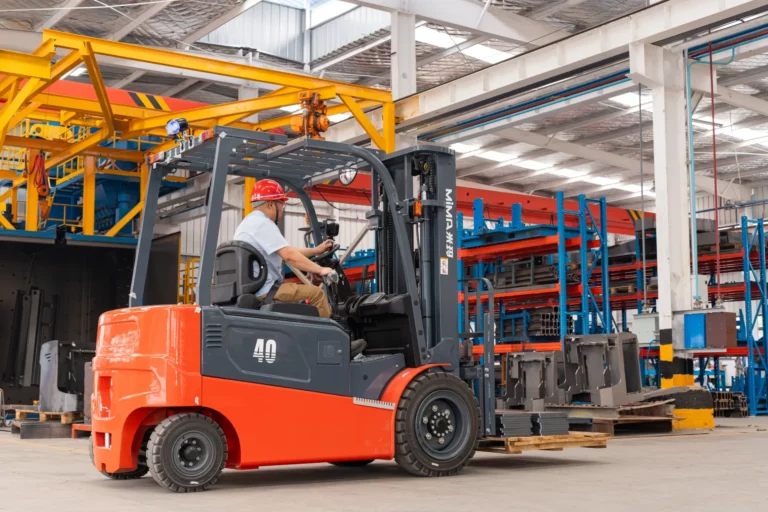
Configure the Forklift Around Your Operation
The right truck depends on the load, working space, lift height, travel route, environment and daily operating intensity.
- Maximum load, load centre and residual capacity
- Required lift height, mast type and closed mast height
- 3-wheel, 4-wheel or stand-on operating format
- Aisle width, turning space and container access
- Indoor or outdoor routes, floor condition and gradients
- Battery, duty cycle, tyres and hydraulic attachments
MiMA Thailand can match the truck, mast, battery, tyres, cabin and attachments to your operating requirements, including cold-storage or explosion-protected configurations.
Request a Configuration Review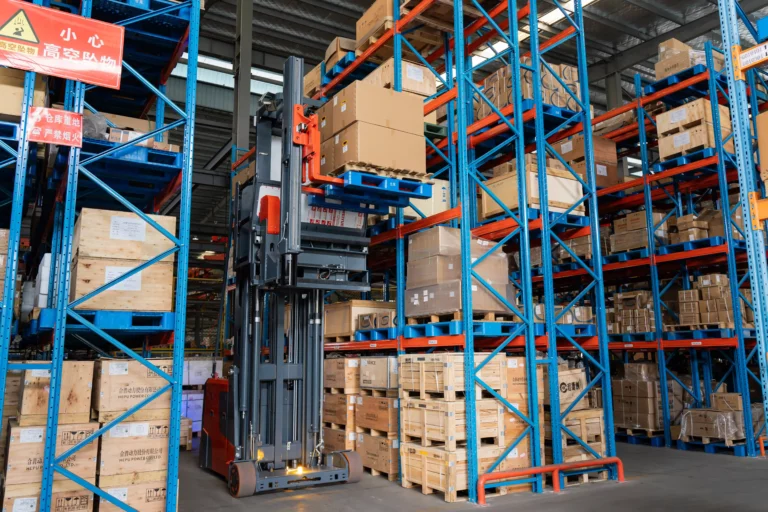

Frequently Asked Questions
What is an Electric Counterbalance Forklift used for?
It is used for loading, unloading, pallet transfer and stacking in warehouses, production facilities, logistics sites and suitable indoor-outdoor handling routes. Its unsupported fork layout can approach closed pallets and vehicles directly.
Should I choose a 3-wheel or 4-wheel model?
A three-wheel forklift provides a smaller turning radius for restricted indoor spaces. A four-wheel model generally offers a broader capacity range and is better suited to heavier loads, longer routes and more varied operating conditions.
When is a stand-on Counterbalance Forklift suitable?
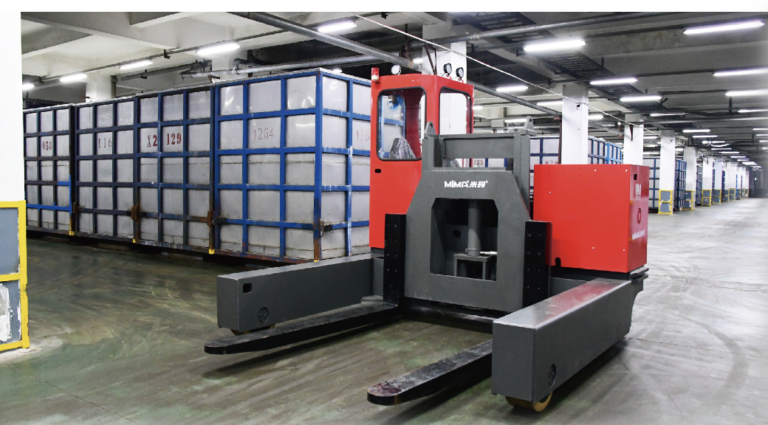
A stand-on model such as MKN18 suits short, repetitive cycles where the operator frequently enters and exits the truck. It combines direct pallet access with compact handling around docks, containers and warehouse aisles.
Should I select lead-acid or lithium power?
Lead-acid batteries suit conventional charging and battery-maintenance routines. Lithium batteries support opportunity charging and reduced routine maintenance. The correct voltage and capacity depend on travel distance, lift frequency, working hours and available charging time.
Can an Electric Counterbalance Forklift work outdoors?
Selected models can work on suitable level outdoor surfaces when equipped for the environment. Floor quality, gradients, joints, drainage, tyre selection, water exposure and travel distance must be reviewed before configuration.
Does rated capacity apply at maximum lift height?
No. Residual capacity normally reduces as lift height and load centre increase. Mast type, fork length and attachment weight also affect the load chart, so the final truck must be checked against the heaviest load handled at height.
What information is needed for model selection?
Please provide the maximum load, load dimensions, load centre, lift height, aisle and doorway dimensions, floor and ramp conditions, indoor-outdoor route, shift hours, battery preference, tyre requirements and any required attachments.